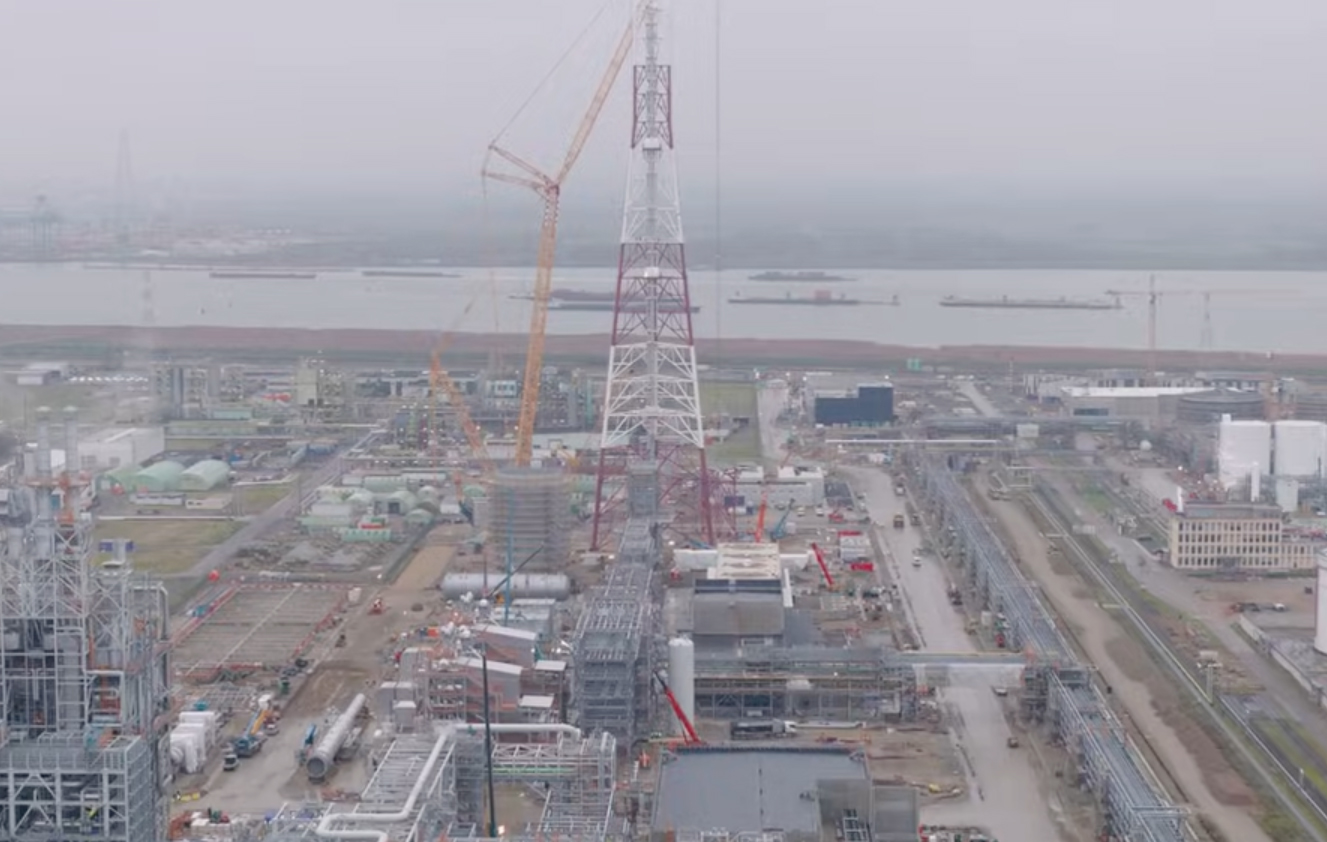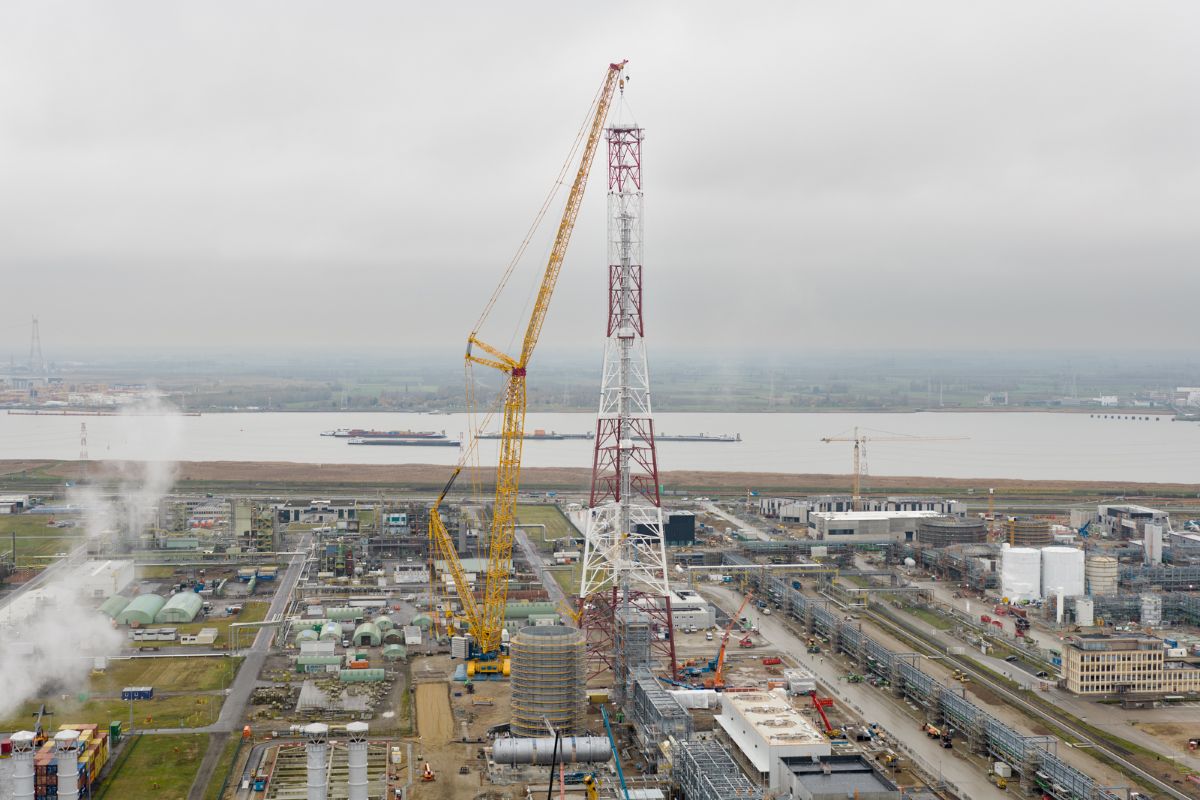
Every chemical plant has a flare. It is a crucial safety mechanism that safely burns off gases during maintenance or in the event of a malfunction. At Project ONE, we are going one step further: in addition to a traditional tower flare, we are also building a ground flare. This will limit the inconvenience to the surrounding area. The fixed ground flare is a first in the Port of Antwerp.
Safety always comes first. We also want to minimise any nuisance to our neighbours from flaring activities. That is why we are building not one, but two flares at Project ONE: a 200-metre-high tower flare and a ground flare, completely enclosed by a 32-metre wall.
The ground flare is designed to minimise noise and light as much as possible. We use this flare for planned maintenance and most failure scenarios: because it drastically reduces noise and light pollution in the surrounding area, neighbours will hardly notice it. Only in the event of major incidents will the tower flare also be used. Thanks to the ground flare, this is needed less often and for shorter periods of time. In addition, the height of the tower flare ensures that combustion takes place further away from the surrounding area, which also reduces noise pollution.
With this dual approach, Project ONE combines maximum safety with minimal impact on the environment. Roel Evens, team lead of the cracker team, explains all about it in the video.
How does a flare work?
- Gas flows to the flare through a network of pipes.
- Pilot flames on the flare head ensure immediate ignition.
- Steam and sucked-in air ensure clean combustion without black smoke.
- The noise that is sometimes audible comes from steam sucking in air.
- Both flares work according to the same principle.